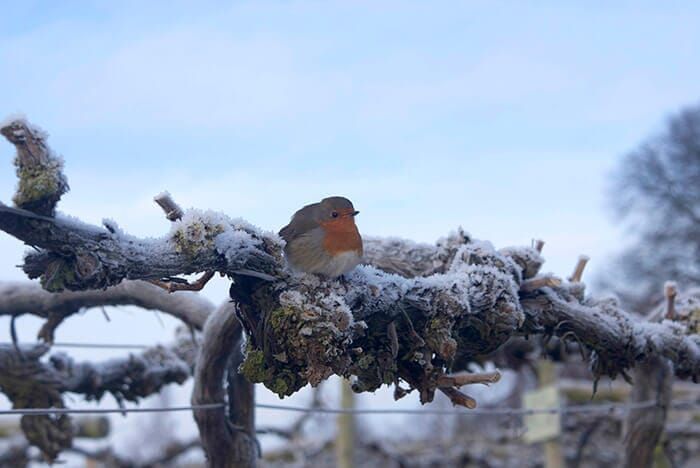
A sustainable vineyard: Our commitment to the environment

28 March 2025

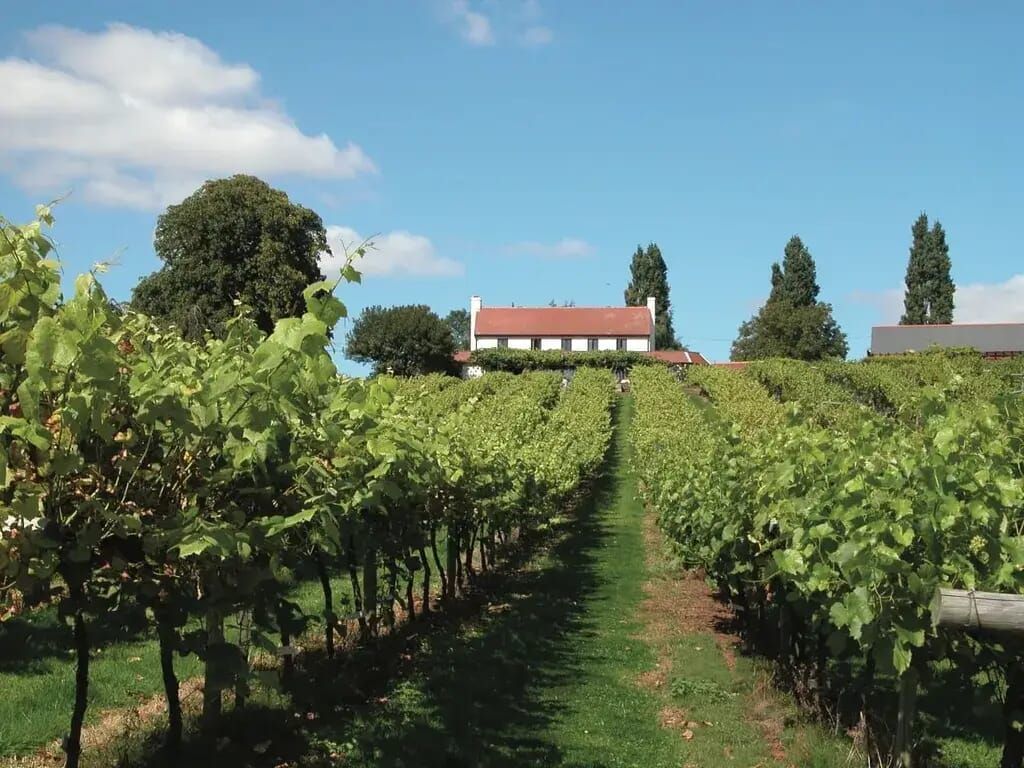
Here at Three Choirs Vineyard, we are committed to being as sustainable as possible.

However, the vineyard isn’t organic. We do believe it’s not possible to be fully organic in this country, but we do limit our use of pesticides to the absolute minimum. We probably use about a quarter of what we are legally allowed to use.

One way we reduce our use of pesticides is by using foliar feeds made from seaweed extracts. Foliar feeds feed the vine directly through the leaf, allowing the vines to absorb essential elements quickly. The theory behind using these feeds is that, if we keep the vines healthy and strong, they will be better able to defend themselves from disease.

In the UK, the biggest risk to vines isn’t from insects, it is from mildew. Mildew can slow down the growth of the vines and reduce both the quantity and quality of the grapes. It can also weaken the plants and make them more vulnerable to disease or insects. Grapes like cold weather in winter and warm, dry weather in the summer. But in this country, we have a lot damp, warm weather, which causes mildew to thrive. If we have a year like we had in 2024, there can be a lot of disease, which impacts our harvest.

We don’t have any irrigation in the vineyard, so our water consumption is probably lower than you would expect for a business like ours. In fact, we don’t have a huge amount of water available, so we do have to be careful not to use too much. We use water sprays and pressure to clean out our tanks, which clean effectively using a lot less water than other cleaning methods.

Glass production and transport uses a lot of energy. This can have a really negative impact on the wine industry’s sustainability, so it is important to us to use the lightest weight glass we can for our bottles. 

Thomas Shaw, managing director, said: “The problem is there’s a consumer reaction to the weight of a bottle. People pick up a light wine bottle and think it’s cheap, whereas we pick up a light bottle and say, ‘Isn’t that amazing?’”

Although the bottles for sparkling wine are always thicker and heavier – they have to be to take the pressure of the secondary fermentation which takes place in the bottle and causes the bubbles.
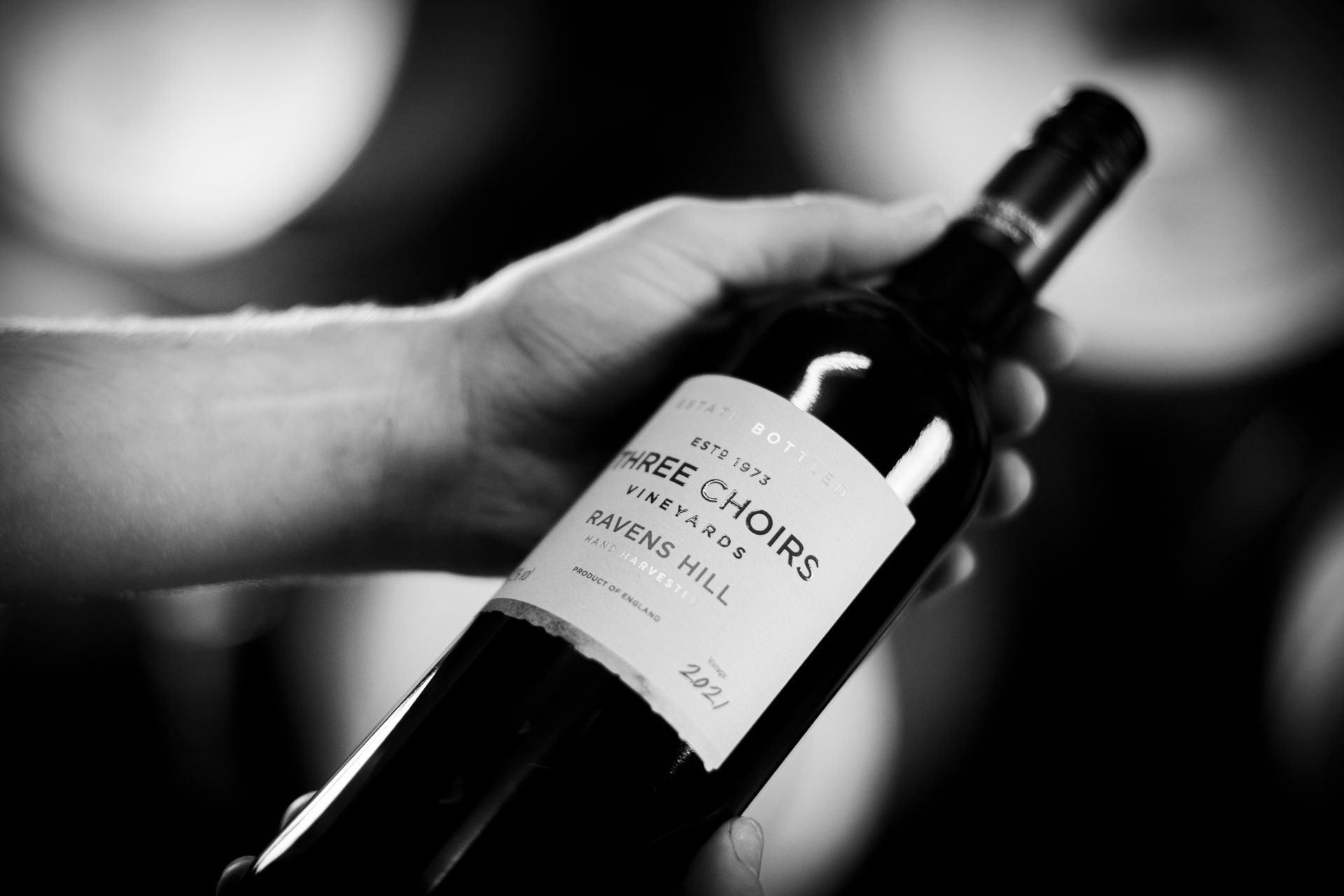
A bottle of wine labelled Three Choirs Vineyards Ravens Hill

Three Choirs Vineyard use screw caps rather than cork. There are pros and cons of each, but we feel that screw caps are the best way forward and the best way to seal a bottle. Too much use of cork will kill the cork trees and the wildlife that live there. Metal screw caps can easily be recycled, although whether people do recycle them, we’re not sure! If you’re reading this, please do your bit and recycle your metal screw caps.

But sustainability isn’t just something we think about for the vineyard itself and the wine. It is something we consider for the entire business. All of our electricity across the vineyard from the vinery to the brasserie and our guest rooms is from 100% renewable, certified genuine green sources. And all food waste from the kitchen goes to a digester and is turned into electricity off-site.

We aim to avoid single use plastics wherever possible. We don’t have little plastic bottles in the bedrooms like you still see in many hotels. Instead, we use bigger refillable bottles of soap, shampoos and shower gels.

Most of our laundry is handled on site at Three Choirs, reducing the need for extra transportation to an external service. We launder items like towels, robes, and kitchen cloths in house. The only exception is our bed linen, which we outsource to a local company since we don’t have the facilities for ironing and pressing.

We have pumps on site, so our electricity usage is very low.


We recycle as much as we can – glass bottles, of course, but also waste cardboard, aluminium cans and plastic.

As a consequence of Three Choirs’ low use of chemicals, the vineyard is a haven for wildlife – from rabbits and badgers to woodpeckers. The five ponds on site attract a range of visitors from newts to dragonflies. 

Thomas continued: “I think we are doing well compared to the industry as a whole. There’s a lot of talk of sustainability within the industry, but I think there’s also a lot of greenwashing – as there is in a lot of industries.”

Greenwashing is when a company or product is marketed as environmentally friendly, without making any meaningful changes. It can mean consumers end up buying from businesses who are good at PR rather than those which are making a genuine effort to be sustainable and reduce their environmental impact. 


Thomas said: “It’s complicated and every business is different. But every business has to look and see what they’re wasting that they shouldn’t be. Look in the rubbish bin and you’ll get an idea of what you shouldn’t be using in the first place!”

He concluded: “We take sustainability seriously and we do as much as possible within the constraints of a business like ours – combining the wine making and the hospitality side of the business.”

More from our blog...
A selection of wine bottles in a cabinet which have been produced by Three Choirs Vineyard
18 December 2025
Three Choirs Vineyard enjoyed an outstanding 2025, with ideal weather, warm summers and a long growing season delivering an excellent harvest.
25 November 2025
With the festive season just around the corner, thoughts turn to Christmas dinner, parties and celebrations. And whether you’re getting the party started or relaxing in front of the TV on Christmas Day evening, you may want to enjoy the festivities with a glass or two of wine. But how do you choose your wine for Christmas? Well the good news is, while you might want to splash out and choose something a bit more special than your usual tipple, there are no rights and wrongs when choosing wine for Christmas. Thomas Shaw, managing director of Three Choirs Vineyard, said: “Don’t feel as though there are any rules to follow. The most important thing is to drink what you enjoy. If you don’t enjoy red wine, don’t drink red wine, drink white instead!” Some people like to enjoy sparkling wine on Christmas Day. When it comes to sparkling wine, people tend to fall into two camps – those who love it and will drink it on every occasion and those who really don’t like it! If you’re someone who isn’t keen on sparkling wine, but you’ve got guests coming round who might enjoy a glass of something fizzy before Christmas dinner, there are a range of options. Thomas continued: “There’s no need to go crazy and buy something expensive. There is a big range of prices from Cava and Prosecco up to top of the range Champagne, so you can spend as much or little as you want. “If you’re going to mix it with orange juice for buck’s fizz, definitely buy something cheaper!” While it’s not usual to have sparkling wine with your Christmas dinner, if you or your guess fancy some fizz with your turkey, just go for it! Alternatively, you might want to enjoy a refreshing white wine at lunchtime, then move to drinking red wine in the evening. Red wine is served warmer and feels like something to be enjoyed when you’re wrapped up warm in front of the fire. But there are no rules that say you have to move from white to red if you don’t want to and there are no rules which tell you exactly when you should make that change. Just do what feels right for you and don’t worry about what anyone else thinks! Whether you’re looking for red, white or sparkling for Christmas, if you want some advice and good value for money, go to a local independent wine retailer. They know all the wines on their shelves and should be able to help you choose something which is just right for you, your family and friends. Don’t be scared to ask for help! Most people will know the names of some popular wines, but won’t know, for example, whether a particular year was a good year. Asking someone who knows wines can be a real help when you are faced with so much choice. In the run-up to Christmas, local wine merchants and vineyards will sometimes hold evenings where you can go along and taste some wines to help you choose. It’s true that the price of a bottle of wine does generally reflect its quality, so when you go to a wine merchant, have a realistic budget in mind and try to stick to it! Unfortunately, wine has got more expensive in recent years, due to poor harvests in Europe, as well as inflation and the rising costs of energy and labour. Because the Christmas period is more than just one day, if you’re interested in trying new wines and finding out more about them, it is a great opportunity to learn more about what you like. Thomas said: “If you buy several different wines and taste them over a few days over Christmas, hopefully you will really like one or two of them. Having a variety over a short period of time means you’re less likely to forget what you like and what you were less keen on. And it’s good fun!” Could there be a better way to choose your wine for Christmas? 
20 October 2025
After the earliest harvest on record, brought about by the warm summer, the last grapes of 2025 were picked here at Three Choirs Vineyard on 9th October. The harvest is the biggest and most important event every year on the vineyard calendar. And the key thing for us is the quality of fruit, rather than the quantity. Thomas Shaw, managing director of Three Choirs Vineyard, said: “If we have a lot of fruit, we generally don’t get such good quality. This year we’ve got very good quality grapes! “It’s not such a good year for making sparkling wines because the acidity in the grapes was low due to the high temperatures, but 2025 is an excellent year for making still wines.” Now the grapes have all been picked and pressed, they are in tanks in the winery and fermentation is taking place. By the end of November or early December, fermentation should be complete, and the winemakers will start to taste the individual tanks and decide how that wine is going to be used – whether it is going to be a blend or a single variety. Those decisions will be made before Christmas this year, rather than afterwards, as is often the case.
Harvesting grapes at Three Choirs Vineyard
29 September 2025
Last month, we told you all about our plans and hopes for harvest at Three Choirs Vineyard. Now, a few weeks on, we can tell you all about how successful it was. Harvest 2025 was the earliest harvest on record for us, after a very dry and consistently warm summer. We started picking two weeks earlier than usual and will finish picking three weeks earlier, at the start of October. Some years, when we’ve had a very late harvest, it has lasted almost until December. But this year has been a fast and furious harvest! We’ve had a bit of rain during September. This can prove problematic during harvest, but we’re pleased to say it was nothing disruptive this year. In fact, the weather has stayed perfect through to the end of September, to keep the grapes in good condition. The positive news is that it wasn’t just an early harvest – it was a good one, with very high quality grapes. The 2025 wines which will start to come out in the middle of next year should reflect that. 
28 August 2025
As August draws to an end, the team at Three Choirs Vineyard are gearing up ready for our harvest. But when is the right time to pick the grapes? We don’t have a definite set date for the annual harvest; it all depends on the weather. This year, it looks likely to start a bit early – probably in the first week of September - because of all the good weather we’ve had this summer. That is about 10 days to two weeks earlier than usual. As the climate is changing, the trend is towards picking earlier than we used to. But the harvest still takes the same amount of time. Generally, we would expect the harvest to last for about 10 weeks, but this will depend on what the weather is like and the quantity and quality of grapes on our vines. Here at Three Choirs, we have 14 different varieties of grapes, and they all ripen at slightly different times. The first grape we will pick is Siegerrebe, which is a pinky orange colour when ripe. Siegerrebe makes a white wine, because, as with most grapes, all the colour is in the skin and not the juice inside. Siegerrebe takes 76 days from flowering until the fruit is ready to pick. The timing really is as specific as that! All of the grape varieties have precise timings, although some of them are longer than others. Thomas Shaw, managing director, said: “It’s been a good year, with lots of sunshine. The grapes are fairly small, but that means they should have a nice concentration of flavours and sugars, which is what we need. We don’t need big fat grapes like you get in the supermarket, because they’re full of water.” It hasn’t just been a warm, sunny year, it has been a very dry one too. Will that affect our harvest? Thomas continued: “There was a lot of moisture in the ground early in the year. The roots of our vines go down 12 to 15 foot, so there is still enough moisture down there for them. “Grapes are different from other crops. Some farmers have been struggling this year because their crops have very small roots, and the ground is far too dry for them.” Picking is all done by hand. Fruit is picked and pressed on the same day. Thomas said: “To maximise the quality, we don’t pick when it’s rainy. If it’s raining, we can get a lot of wet fruit into the winery, which dilutes the wine.” So here’s hoping for a dry harvest! Early indications are that 2025 will be a successful year for grapes at Three Choirs. Flowering in late June and early July is a key time for our harvest, and the weather was just what we needed at that time. September and October will be the final decider if 2025 is a good quality year for our wines.
A lady sipping wine from a glass. Wine Tasting at Three Choirs Vineyard
7 July 2025
New to wine tasting? It’s for everyone! Learn why there’s no right or wrong and get tips to find wines you’ll love from Three Choirs Vineyard.